 |
Leena Trivedi-Grenier
California isn’t thought by many as a barbecue hotbed, but that may very well be changing. The traditional barbecue of the American South, which focuses on affordable ingredients and slow-smoking meat over wood coals, is combining with ingredient-driven cuisine, whose focus concentrates on high quality, sustainable sourcing and refined cooking techniques to create a truly unique version of barbecue.
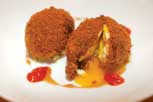
At Wexler’s in San Francisco, diners enjoy poached BBQ Scotch eggs, rolled in smoked beef short rib ends (redolent of smoked brisket) breaded, fried and served with a house-made hot sauce and a sweet tea gastrique. Head just an hour and half north to BarBersQ in Napa, and meat-lovers dive into Memphis-style pulled pork (sourced from a family farm in Iowa), topped with apple cabbage coleslaw and butter lettuce, accompanied by house-canned pickles, grown in the restaurant’s garden.< span class="text152">
Barbecue: a longstanding American tradition
In America, the term “barbecue” refers to two different cooking methods: backyard grilling or slow-cooking meat over wood coals, a method first made popular by the states south of the Mason-Dixon line. Both the term and cooking technique was developed from the Carib and Taino peoples of South America and the Caribbean. The Spanish discovered these two groups smoking meats on a wooden frame that lay over a bed of coals called a barbricot, which in Spanish is pronounced barbacoa.
This cooking method of open pit barbecue was adopted by Europeans in America, and whole hog barbecue parties soon became so popular that presidents, beginning with George Washington, would host them.
Styles of barbecue in the U.S. vary regionally. Georgia, South Carolina, Mississippi, Tennessee and Alabama generally stick to whole hogs, where the pork is dry-rubbed with a spice mixture and smoked to the point of falling off the bone. The meat is “pulled” or shredded and tossed with a thin tangy sauce of vinegar and red pepper. In urban areas, pork shoulders and ribs are more common, and while most states use a tomato-based or a spicy vinegar sauce, South Carolina is famous for their yellow mustard-based sauces. Kentucky prefers to barbecue mutton, whereas Oklahoma, Missouri, Kansas and Texas prefer to smoke beef (typically brisket) and sausages in a closed pit.
California’s modern barbecue
Why barbecue? Many chefs out West have opened a barbecue-inspired restaurant due to lack of quality barbecue in the state, in addition to the feeling of comfort eating barbecue gave them personally. This trend appears in two main applications in California: restaurants that serve authentic barbecue with high quality, sustainable ingredients; and barbecue- inspired restaurants.
When it comes to California chefs, sustainability and high quality ingredients are paramount, no matter what style of cuisine they are cooking. Some chefs think that barbecue is perfect as is, and they feature various forms of traditional regional American barbecue with exceptional quality meats and produce. At T-Rex BBQ in Berkeley, Chef Miles Kline does just that, using only humanely-raised, hormone and antibiotic-free meat he sources from Hearst Ranch, Bassian Farms and Modesto Poultry among others.
At BarbersQ in Napa, owner Gene Tartaglia created a garden for the restaurant in his own back yard. Whether he’s picking carrots to pickle, can or cabbage, for their apple cabbage coleslaw, or the perfect topping for their popular Memphis-style pulled pork sandwich, Chef de Cuisine Joey Ray feels the restaurant’s garden inspires the restaurant’s menu, making their barbecue stand out amongst others.
Chef and Owner Michael Rosen of Zeke’s Smokehouse in Los Angeles, found one of the last suppliers to produce locally raised, hormone and antibiotic-free cattle in Southern California; exclusively using Brandt Beef for his award-winning Texas-style brisket recipe. Rosen first dry rubs the brisket, smoking it with hickory wood in a J & R Manufacturing smoker for six to eight hours at 200?F. The end result has a beautiful pink smoke ring you can only get by using a closed pit smoker, and a tender piece of beef with a delicious smoky flavor. Another popular option for great quality beef comes from our neighbors to the north. Marty Carpenter of Canada’s Beef Information Centre says, “Most people don’t think of Canada when thinking of barbecue, however, Canadian beef is widely available in California and with the Canadian beef advantages of quality and consistency, Canadian beef brisket and beef ribs are perfect for smoking and serving up barbecue style.”
At Baby Blues BBQ in San Francisco, owner Paul Fischer does what he calls “hybrid BBQ,” by blending elements of different regional styles to create a unique variety of his own; one that focuses on Memphis style (St. Louis cut) ribs, dry rubs and meats slowly smoked in Guinness, serving a sauce on the side that comes from the Western regions of North Carolina. Regulars particularly enjoy “The Jack,” a beer-braised, smoked link sausage with Cotija cheese and hot peppers.
BBQ-inspired restaurants
Gypsy Kitchen Catering in San Francisco doesn’t market itself as a barbecue operation, but they draw their flavors and inspiration from American barbecue traditions. Chefs Ryan Ostler and Katharine Zacher’s (formerly of Bruno’s) take on pork and beans uses pork belly from Eden Farms that is lightly smoked, braised and tossed with baked butterbeans, grilled bitter Treviso and ramps when in season; turning a traditionally rich accompaniment, into a hearty dish, balanced with greens and vegetables.
To appease the healthier California palates, Ostler created a smoked tofu sandwich reminiscent of a Vietnamese banh mi. By smoking the tofu, it takes on a hearty, meaty flavor, which is then balanced out by fresh, and house-pickled, vegetables that are topped with a spicy aioli, served on a mini baguette.
Chef Larry Vito, owner of BBQ Smokehouse in Sebastopol, prefers to use classical French techniques to cook his barbecue, and his 2009 Harvest Fair Gold Medal winning brisket is proof of his talents. Using Apple Wood Chips to produce a sweeter smoke, Chef Vito smokes his brisket for 14 hours, and serves it with a French-inspired sauce, made from reduced beef drippings and aromatics.
At Town Hall in San Francisco, owner Mitch Rosenthal adopts modern cooking methods to make their house-smoked St. Louis style ribs. Using heritage pork, Rosenthal likes to keep his dry rub pretty simple so the naturally bold flavors of the meat can stand out; seasoning it with just salt and pepper. The ribs are then smoked for two hours with cherry wood in a Cookshack electric smoker, fitted under the kitchen hoods. Next, the ribs are cooked sous vide for the rest of the way, ensuring each rack is incredibly tender and moist. Town Hall’s barbecue sauce is another work of modern art. Modeling it after a tomato-based barbecue sauce, Rosenthal gives the sauce his own twist by smoking the ketchup and adding rib fat saved from the barbecue to create a meaty, smoky sauce with notes of vinegar. But Rosenthal prefers to serve his sauce on the side of all his smoked meats, as do many barbecue aficionados, to let the flavor of the meat shine.
Just as Town Hall embraces a more refined approach to barbecue, please don’t call Wexler’s a barbecue shack – it is anything but, and you realize this as you bite into your pulled lamb sandwich with watermelon vinaigrette and green peach-red cabbage slaw. Think of it more like a really good restaurant with hints of barbecue inspiration. Chef Charlie Kleinman, former co-chef at Fish and Farm in San Francisco, prefers to work with the flavors of barbecue rather than the concept of American barbecue as a whole, and it shows in his creative menu. You won’t find traditional smoked beef brisket here, but you will find a smoked short rib, dry-rubbed and smoked for three to six hours on the bone until tender. When it’s served on top of French mashed potatoes, local peas and a bordelaise-inspired barbecue au jus, you won’t miss traditional Texas brisket, but you’ll be thankful it inspired this creation.
Wexler’s barbecue applications don’t stop at the table. Bartender Kate Bolton created Wexler’s Smoked Manhattan, for which she smokes Noilly Pratt Sweet Vermouth, Amarena cherries and cherry juice, pairing the smoked ingredients with a splash of Four Roses Bourbon and bitters, to create a drink that is sweet, savory and smoky all at once.
Smoked meat aspirations?
For chefs looking to incorporate barbecue or barbecue-inspired dishes on their menu, Chef Ryan Ostler warns that because it is such a time-consuming and lengthy process, it needs to be a labor of love. Despite the varying advice from barbecue experts to enthusiastic novices on how to develop the best barbecue, nearly every chef agrees that a barbecue-focused road trip is a must. When you return from a tour through Texas, Memphis, Kansas City and the Carolinas, you’ll have the requisite inspirations to create your own modern barbecue with the bountiful ingredients of California.
Leena Trivedi-Grenier is a Bay-area food writer and cooking teacher. Her writing has appeared in The Business of Food: Encyclopedia of the Food and Drink Industry, and will be featured in several upcoming titles by Greenwood Press as well as an upcoming Cultural Arts Resources for Teachers and Students newsletter. Check her out on her food blog, www.leenaeats.com.